Rare Collection
Certified Natural Ruby Gemstone
Ruby
The "King of Gems," a red corundum that has commanded desire for millennia.
The King of Gems: The Essence of Chromium
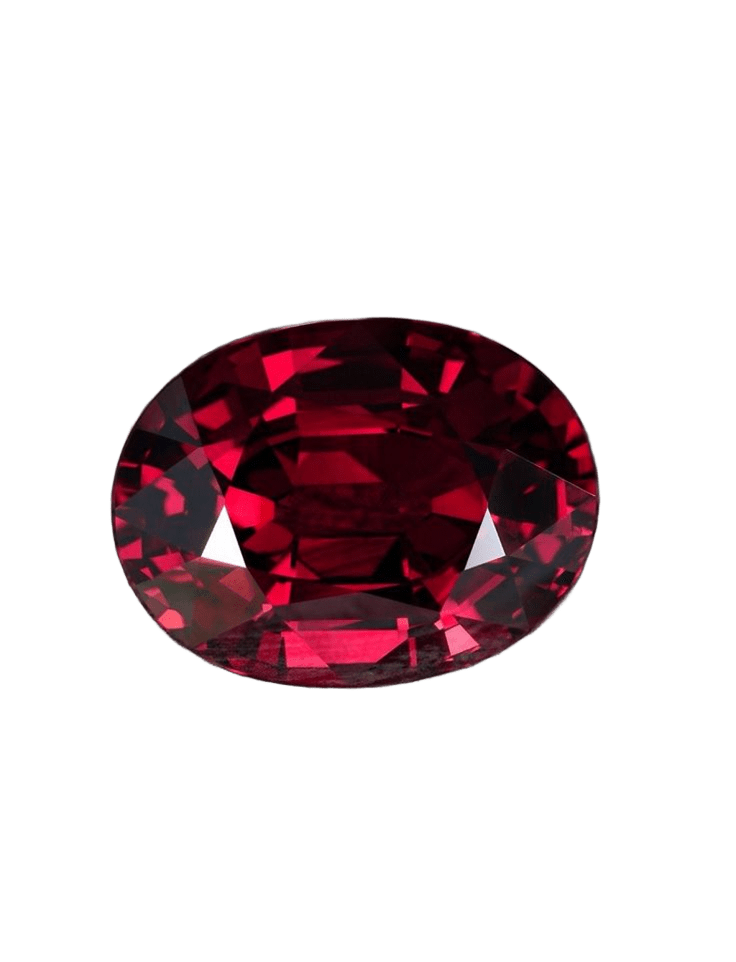
Ruby, the most valuable variety of Corundum (Al₂O₃), has been the "King of Gems" for over two millennia. Its legendary red hue is the result of Chromium replacement within the crystal lattice. However, Chromium does more than just provide color; it also causes a powerful UV fluorescence that allows the stone to "glow" even in natural sunlight. This "inner fire" is why rubies were traditionally compared to the "blood of the Earth" or "molten embers." In many cultures, the ruby was believed to be an inextinguishable flame that could boil water if submerged, a testament to its incredible optical energy and thermal associations.
Chemically, Ruby is one of the hardest substances known to man, second only to diamond with a Mohs score of 9.0. This extreme durability, combined with its profound rarity, has made it a symbol of power, passion, and protection for kings and emperors throughout history. Unlike its blue sibling, Sapphire, which can occur in large, clean crystals, Ruby is rarely found without inclusions. These "birthmarks," particularly the fine "silk" of rutile needles, are often used by gemologists to confirm a stone's natural origin and its specific geographic locality, adding to the individuality of every high-end specimen.
From Mogok to Mozambique: A Global Shift
Historically, the Mogok Valley in Myanmar (Burma) was the world's only source for the elusive "Pigeon's Blood" ruby—a stone with a pure, electric red hue that commands the highest prices per carat of any gemstone in history. However, the discovery of massive deposits in Montepuez, Mozambique, in 2009 heralded a new era for the industry. The Mozambique strikes have brought a level of transparency and size to the ruby market that was previously unheard of, producing saturated, high-clarity stones that rival the legendary Burmese material in everything but historical provenance.
While Burma remains the traditional "pedigree" source, Africa has firmly established itself as the modern hub for investment-grade rubies. The Montepuez mines are now the primary source for the world's top jewelry houses, providing a reliable stream of stones that meet the rigorous standards of modern luxury design. This shift has democratized high-end ruby access to some extent, though the extreme rarity of unheated, large-carat Mozambique rubies ensures that the upper echelon of the market remains as exclusive and competitive as it was in the days of the Tsars.
Treatment Transparency & Investment Rarity
The value of a ruby is heavily dictated by its treatment status. Because of the inherent inclusions in corundum, the vast majority of rubies on the market undergo heat treatment to dissolve silk and improve color saturation. While this is an accepted industry standard, it is the unheated rubies—those that possess their saturated red color and high clarity naturally—that are the true holy grails for investors. An unheated Burmese or Mozambique ruby over five carats is an extraordinary rarity that often sees intense competition at international auctions, with prices consistently reaching multiple millions of dollars.
For the sapphire and ruby collector, transparency is paramount. Modern technologies like laser-ablation and spectroscopy are used to detect even the most subtle enhancements, making certification from top-tier labs (like Gübelin or GRS) an absolute requirement for any high-value acquisition. As the world's supply of unheated rubies continues to dwindle and demand from emerging markets grows, the ruby remains a rock-solid asset. It is a stone that transcends trends, carrying with it a timeless narrative of regal power and undeniable geological miracle that continues to captivate the human spirit as much today as it did thousands of years ago.