Rare Collection
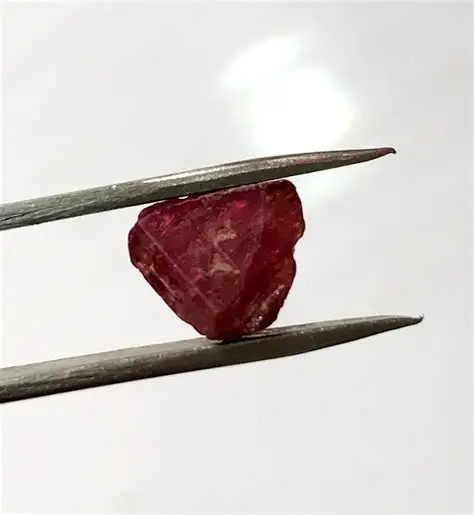
Spinel Family Group Loose Stones
The Spinel Family
The "Jedi" of gemstones: All-natural brilliance and the world's most historic "imposter."
The Great Deception: A Royal Legacy Reborn
For over a thousand years, the Spinel family was the world's most successful "undercover" gemstone. Because it was frequently found in the same alluvial gravels as Ruby and Sapphire, it was historically classified as "Balas Ruby." Some of the most famous "rubies" in history are actually magnificent red Spinels, including the 170-carat "Black Prince's Ruby" and the 352-carat "Timur Ruby," both prominent features of the British Crown Jewels. It was only in 1783 that the mineralogist Jean-Baptiste Louis Romé de l'Isle officially identified Spinel as a distinct mineral species, a discovery that eventually turned the "imposter" into one of the most respected and sought-after gems by modern connoisseurs.
Scientifically, Spinel is a magnesium aluminum oxide (MgAl₂O₄) that crystallizes in the cubic system. This "isometric" structure is shared with diamonds and garnets, and it means that Spinel is singly refractive. When light enters a Spinel, it is not split into two rays, resulting in a single, unadulterated path of light that produces an incredibly "clean" and punchy brilliance. This optical property, combined with a high refractive index and excellent dispersion (fire), gives Spinel a visual "pop" that often exceeds that of the rubies it once imitated. With a hardness of 8.0, it is exceptionally durable and capable of maintaining its vitreous luster for centuries.
Vivid Palette & Geological Purity
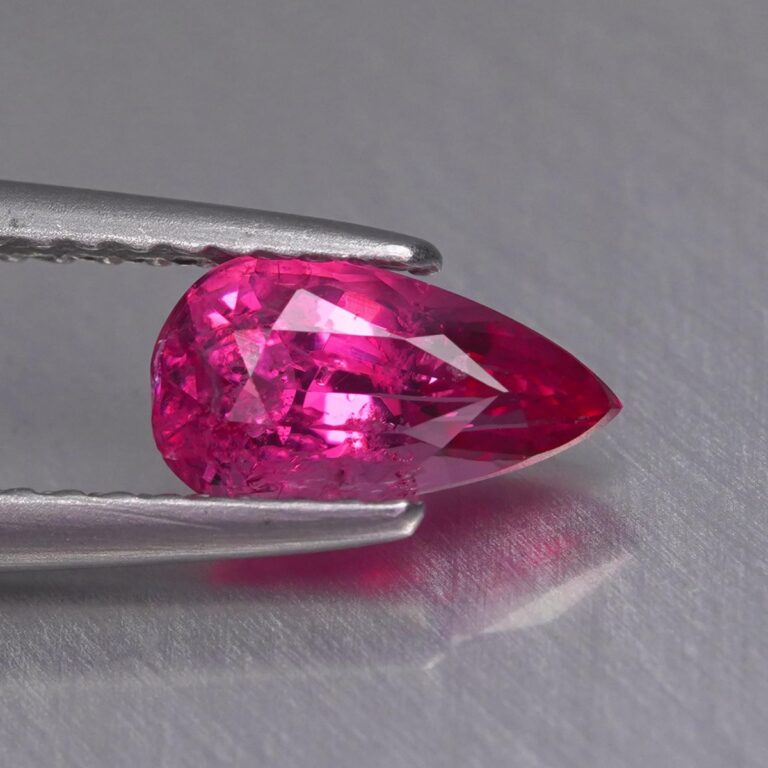
The color palette of the Spinel family is nothing short of extraordinary. While the "pigeon-blood" reds are the traditional prizes, the modern market has been revolutionized by the discovery of "neon" pinks from Mahenge, Tanzania, and electric "Cobalt" blues from Luc Yen, Vietnam. These stones possess a saturations that looks almost radioactive, glowing even in low lighting conditions. Furthermore, Spinel provides a range of sophisticated "blush," "lavender," and "steel-grey" tones that have become the darlings of contemporary independent jewelry designers. This versatility, combined with the fact that Spinel is almost never treated or enhanced, makes it the ultimate "all-natural" choice for the modern collector.
To invest in Spinel is to invest in geological purity. In an industry dominated by heated rubies and oiled emeralds, Spinel exists as a bastion of integrity. What you see in the viewer is precisely what was forged in the heat of the Earth's crust millions of years ago. As education among gemstone buyers increases, the demand for Spinel continues to skyrocket, moving it from a "collector's secret" to a mainstream luxury asset. Whether it is a traditional red specimen of royal proportions or a modern, neon-pink Mahenge crystal, the Spinel family represents the perfect intersection of historical intrigue, scientific perfection, and raw, natural beauty.