Rare Collection
Natural Lapis Lazuli Stone
The Lapis Family
The celestial blue of the ancients, sourced from the mountains of the Hindu Kush.
Celestial Azure: The Stone of Stars and Emperors
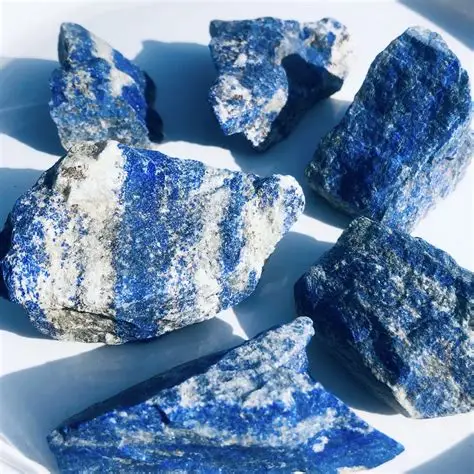
Lapis Lazuli is not just a mineral, but a rock—a complex aggregate of several minerals, primarily blue Lazurite, white Calcite, and golden Sodalite or Pyrite. This "cocktail" of minerals is what gives Lapis its characteristic "starry night" appearance, a deep, celestial blue speckled with golden flecks. Sourced for over 6,000 years from the remote Sar-e-Sang mines in the Hindu Kush mountains of Afghanistan, Lapis is one of the oldest traded gemstones in human history. It was the "Sapphire" of the Bible and the most prized stone of the Sumerians, Babylonians, and Ancient Egyptians, who used it for the iconic funerary mask of Tutankhamun and the jewelry of the Pharaohs.
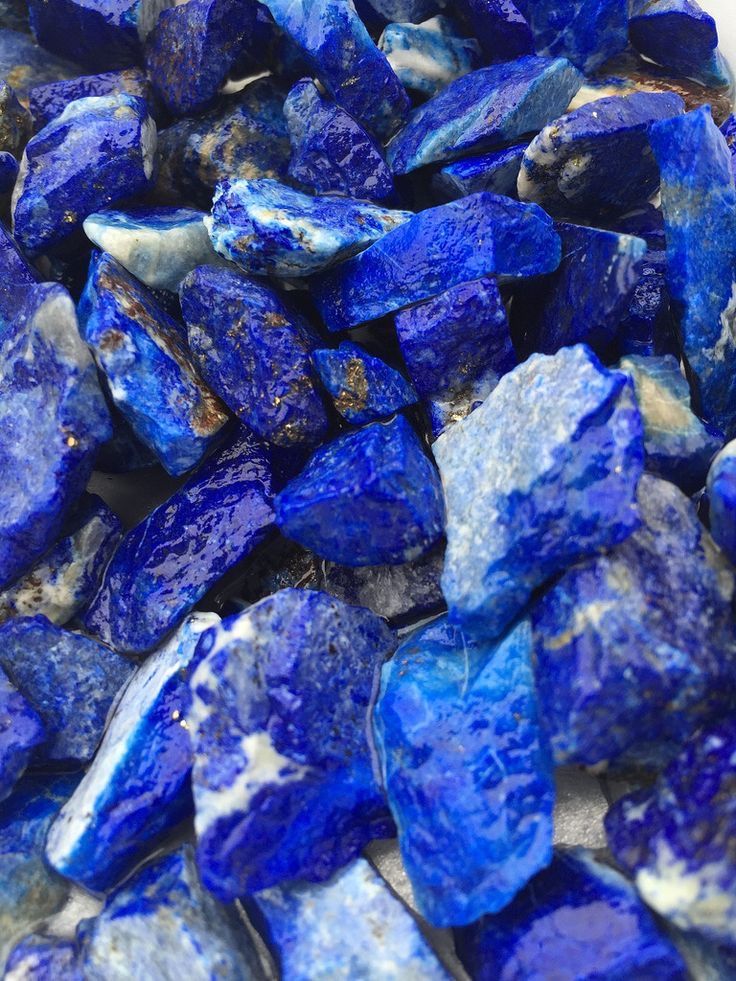
The value of Lapis Lazuli is determined by the "purity" of its blue. The most elite tier is known as "Persian" or "Afghan" grade, which possesses a deep, uniform indigo hue with no visible white calcite and a light sprinkling of golden pyrite. This material is increasingly rare, as the ancient mines become more difficult to work. Beyond jewelry, Lapis has a legendary history as a pigment. Until the 19th century, it was the only source for "Ultramarine Blue," the most expensive and vibrant blue paint in the world. It was used by Renaissance masters like Michelangelo and Vermeer to paint the robes of the Virgin Mary, a fact that links the gemstone to the most significant artworks in human history.
Architectural Blue & Historical Resonance
In the world of high-end design, Lapis is celebrated for its "Architectural Blue." Unlike faceted stones, Lapis is opaque and typically finished into large cabochons, beads, or inlay plaques. Its deep, matte saturation provides a powerful contrast to yellow gold and diamonds, a combination that was popularized by the Great Houses like Cartier and Van Cleef & Arpels during the Art Deco movement. Even today, a piece of top-tier Lapis Lazuli carries a sense of "Old World" luxury and intellectual depth. It is a stone that doesn't sparkle for the crowd but commands respect through its profound color and its 6,000-year legacy of human admiration.
Beyond Afghanistan, Lapis is found in Chile, Russia, and the United States, though the Sar-e-Sang material remains the gold standard for quality. With a Mohs hardness of 5.0 to 5.5, it is a softer stone that requires care, yet its historical resonance makes it a cornerstone of any serious collection. It is believed by many to be a stone of truth, communication, and spiritual vision, mirroring the deep blue of the infinite sky. To own a piece of high-grade Lapis Lazuli is to hold a literal piece of human history, a gemstone that has been sought by kings, artists, and explorers since the dawn of civilization, and one that remains as evocative today as it was in the palaces of Ur.