Rare Collection
Tourmaline Mineral Group Variety
The Tourmaline Family
The ultimate "Rainbow Gem," displaying every hue in the spectrum and beyond.
A Mineralogical Prism: The Chemistry of the Rainbow
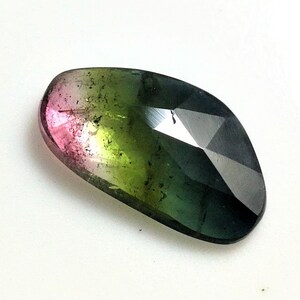
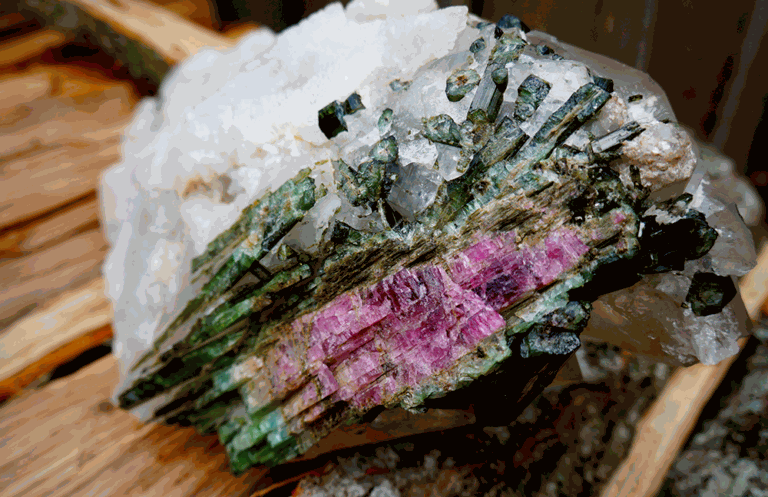
Tourmaline is perhaps the most chemically diverse and visually complex mineral group on Earth. Classified as a complex borosilicate, its chemical formula is so intricate that it was once joked that it "contained everything except the kitchen sink." This complexity is the secret to its legendary variety; as the crystal grows, it can incorporate a vast array of trace elements including iron, manganese, chromium, and lithium. The result is a gemstone family that produces every color in the visible spectrum—and several that aren't found anywhere else in nature. It is the only mineral species that routinely produces "bi-color" and "tri-color" crystals, where a single stone might shift from vibrant pink to deep green in a single slice.
The family is divided into several species based on their chemistry, with Elbaite being the source of almost all gem-quality tourmalines. Within this group, there are several "celebrity" varieties that command the highest prices in the industry. The most famous is the Paraíba Tourmaline, colored by copper and manganese, which displays a glowing "neon" turquoise blue that revolutionized the market in the 1980s. Rubellite provides the deep, succulent reds of fine Bordeaux wine, while Indicolite offers the brooding, saturated blues of the deep ocean. Verdelite, the green variety, ranges from the bright minty shades to the deep forest tones that rival the finest emeralds.
Piezoelectric Powers & Modern Luxury
Beyond its beauty, Tourmaline possesses fascinating "superpowers" known as pyroelectricity and piezoelectricity. When a tourmaline crystal is heated or rubbed, it develops an electric charge, allowing it to attract dust and small particles. Historically, this led Dutch traders to call it "aschentrekker" (ash-puller), as they used the stones to pull ash from their Meerschaum pipes. This unique interaction with energy is mirrored in its optical performance; many tourmalines are strongly pleochroic, meaning they show different colors or different depths of color when viewed from different directions. This requires the master lapidary to have deep expertise in crystallography to ensure the most vibrant axis is facing the viewer.
Today, Tourmaline is the engine of the "New Precious" movement. Jewelry houses that once focused solely on the "Big Three" are now building entire collections around the "Paraíba" and "Watermelon" tourmalines. Its hardness of 7.0 to 7.5 makes it suitable for all types of jewelry, and its sheer variety of color means it can match any skin tone or design aesthetic. Whether it is a large, architectural crystal specimen for a private museum or a matched pair of bi-color earrings, the Tourmaline family represents the unlimited creativity of the natural world, a rainbow captured in stone that continues to captivate scientists and designers alike.