Rare Collection
Natural Quartz Gemstones
The Quartz Family
The foundation of gemology, encompassing the mystical Amethyst and the sunny Citrine.
Mineralogical Versatility: The Giant of the Crust
Quartz (Silicon Dioxide, SiO₂) is the second most abundant mineral in the Earth's continental crust and arguably the most versatile gemstone family in the world. Its name comes from the Slavic word for "hard," a reference to its reliable Mohs score of 7.0. While found everywhere, gem-quality Quartz is a world of its own, divided into "Macrocrystalline" varieties (like Amethyst and Citrine) and "Cryptocrystalline" varieties (like Agate and Chalcedony). This diversity means that the Quartz family has a stone for every possible aesthetic, from the most traditional royal jewels to the most cutting-edge architectural designs. It is the "everyman" of minerals that, in its finest forms, reaches the highest levels of luxury.
Amethyst, the purple variety, was once considered one of the five "cardinal" gemstones along with Diamond, Ruby, Sapphire, and Emerald. Before the massive deposits in Brazil and Uruguay were discovered, it was a stone of extreme rarity, favored by the Russian Tsars and the British Royal Family. Citrine, the sunny yellow sister, provides a bright, optimistic palette and is often found in large, spectacular sizes that make it a favorite for statement "cocktail" rings. Rose Quartz, the stone of unconditional love, offers a soft, translucent pink that has been used in ornamental objects and jewelry since the time of the Ancient Greeks, celebrated for its calming and feminine aura.
Inclusion Gems & Technology Heartbeat
The Quartz family is also the source of the world's most fascinating "inclusion gems." Rutilated Quartz, known as "Cupid's Darts" or "Venus Hair," contains golden needles of Rutile that look like captured lightning. Tourmalinated Quartz features black needles of Tourmaline piercing through clear crystal, creating a striking monochromatic aesthetic. These stones, once considered "imperfect," are now at the center of the "Sustainable Luxury" movement, as designers appreciate the raw, fingerprint-like uniqueness of natural inclusions. They represent the "Wabi-Sabi" of gemology—the beauty of the imperfect and the organic, reminding us of the violent geological forces that created them.
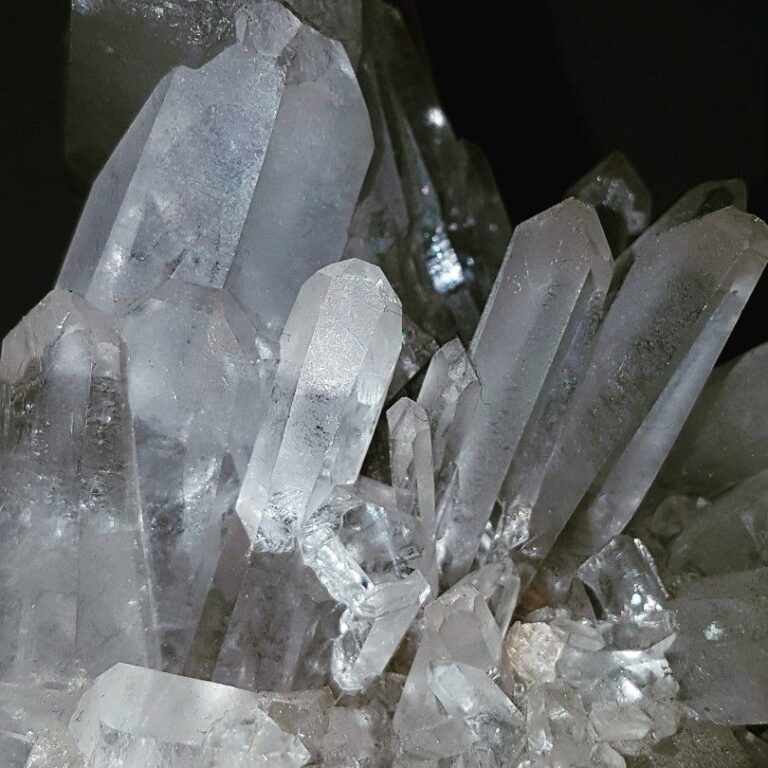
Historically, Quartz has been a stone of mysticism and technology. Rock Crystal (Clear Quartz) was used by ancient civilizations for "crystal balls" and "healing tools," believed to amplify energy and provide clarity of thought. Today, this same property—piezoelectricity—makes Quartz the heartbeat of our modern world, providing the timing for everything from wristwatches to global computer networks. Whether it is a deep purple Uruguayan amethyst of royal proportions or a sleek, minimalist piece of smoky quartz, the family remains an essential part of the gemstone world. It is the perfect entry point for new collectors and a source of endless fascination for experienced connoisseurs, proving that abundance and beauty can indeed go hand in hand.