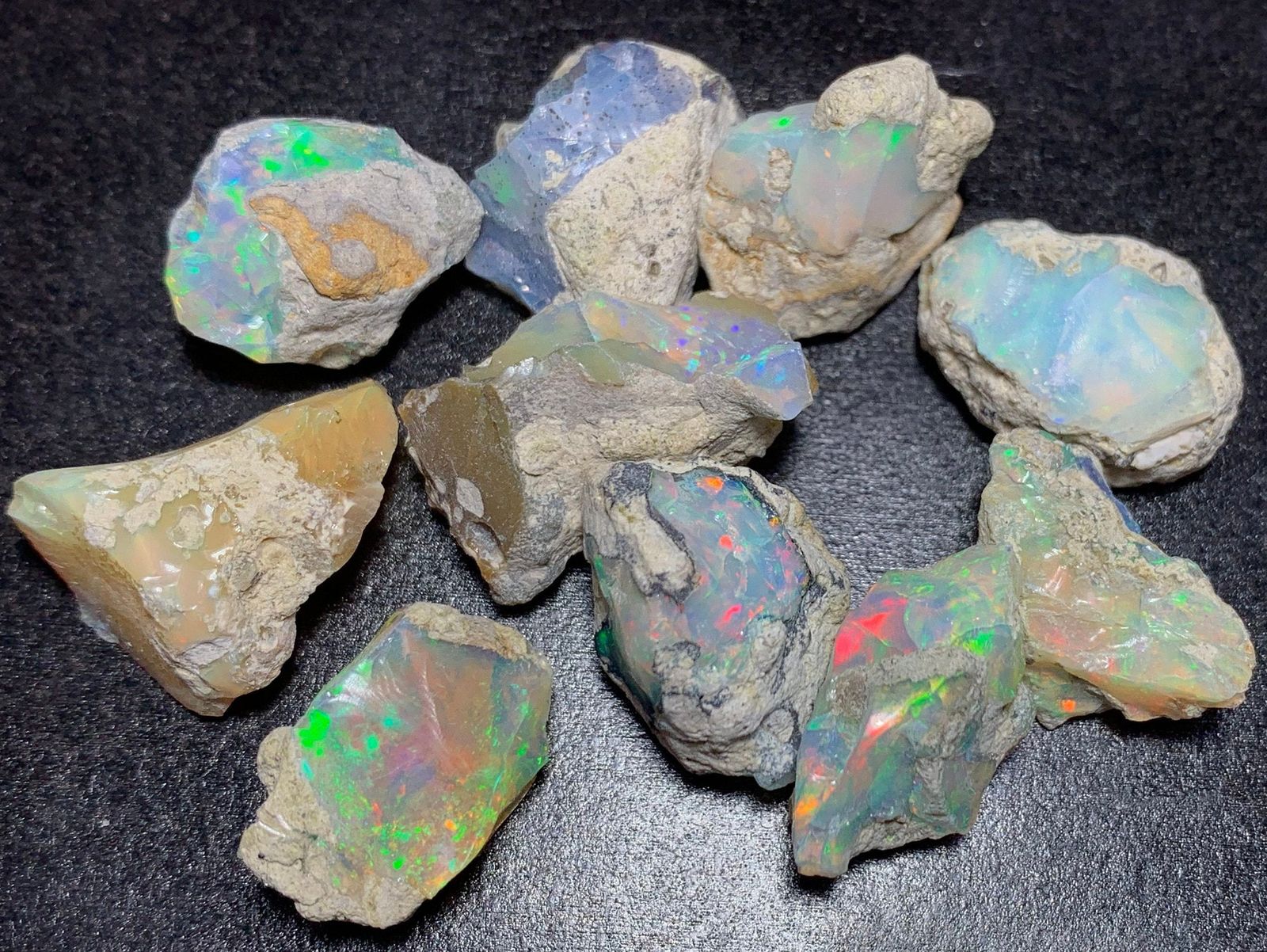
Rare Collection
Loose Natural Opal Collection
The Opal Family
A captured rainbow in stone, displaying the incredible phenomenon of "Play-of-Color."
The Spectrum Thief: A Masterpiece of Silica and Water
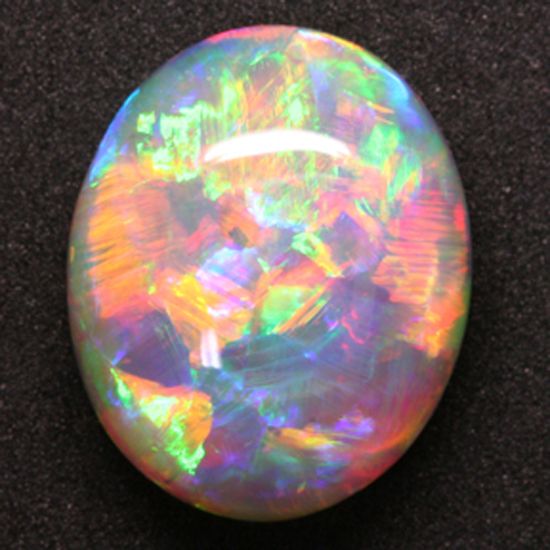
Opal is one of the most mysterious and visually hypnotic gemstones in the world, once described by Pliny the Elder as having the "fire of the ruby, the brilliant purple of the amethyst, and the sea-green of the emerald." Unlike most other gemstones that are crystalline, Opal is "amorphous," composed of tiny spheres of silica and water. When these spheres are uniform in size and arranged in a perfect grid, they diffract light into a stunning array of colors that shift and dance as the stone is moved. This effect, unique to this family, is known as "Play-of-Color." To hold a high-quality opal is to hold a literal piece of a rainbow, a dynamic object that changes its personality with every movement.
The Opal family is divided into several highly coveted varieties, with Black Opal being the most prestigious. Found almost exclusively in Lightning Ridge, Australia, Black Opal possesses a dark body color that allows the neon-bright "fire" to pop with incredible intensity. White and Crystal Opals offer a more delicate, ethereal aesthetic, with flashes of color set against a translucent or milky background. Fire Opal, found in Mexico, is unique for its transparent orange to red body color, often without the play-of-color but prized for its intense, volcanic hue. The rarity of these stones is compounded by the fact that they contain between 3% and 21% water, a delicate chemical balance that must be maintained for the stone to keep its brilliance.
Haute Joaillerie & Optical Magic
In the early 20th century, Opal suffered from a myth that it was "unlucky," a rumor likely started by jewelry rivals to suppress its skyrocketing popularity. Today, that myth has been firmly debunked, and Opal has resumed its place as a darling of the "haute joaillerie" world. Designers for the most prestigious houses use Opal as a central "canvas," surrounding it with diamonds and colored gems that mirror the flashes within the stone itself. Because every Opal has a unique "pattern"—from the broad "Harlequin" to the fine "Pinfire" or the brushstroke-like "Straw"—no two opals are ever the same. Each stone is an unrepeatable fingerprint of nature.
Beyond Australia and Mexico, Ethiopia has recently emerged as a significant source of "Welo" opals, which are famous for their high transparency and intense, 3D color patterns. However, the most elite collectors still seek out the stable, "Old Mine" material from the Australian outback. With a hardness of 5.5 to 6.5, Opal is a gem for the careful wearer, but its visual reward is incomparable. It is a gemstone of imagination, creativity, and shifting moods, a crystalline record of ancient desert storms and the transformative power of water. To own an Opal is to hold one of the Earth's most successful experiments in optical magic, a stone that remains as vibrant and unpredictable as life itself.