Rare Collection
Premium Rhodolite Garnet Stone
Rhodolite Garnet
A stunning rose-red blend of pyrope and almandine.
A Hybrid Symphony: The Pyrope-Almandine Blend
Rhodolite Garnet is not a single mineral species but a masterful organic blend, representing a specific intermediate member of the Pyrope-Almandine solid solution series. Its name, derived from the Greek "rhodon" (rose), perfectly describes its vibrant, rose-red to grape-purple color palette. Unlike many other garnets that can lean toward brownish or dark red tones, a high-quality Rhodolite is characterized by its bright, lively hue and lack of "masking" iron modifiers. This chemical purity makes it one of the most popular garnets in the world, valued for its ability to show consistent color even in lower light environments.
The formation of Rhodolite occurs in high-grade metamorphic rocks, where the specific geological conditions allow the magnesium of Pyrope and the iron of Almandine to merge in a precise ratio. This structural fusion results in a refractive index and level of brilliance that are typically superior to its parent species. With a Mohs hardness of 7.0 to 7.5, Rhodolite is exceptionally durable, making it a favorite for "everyday luxury" pieces like engagement rings and statement necklaces that require a stone capable of maintaining its vitreous luster over time.
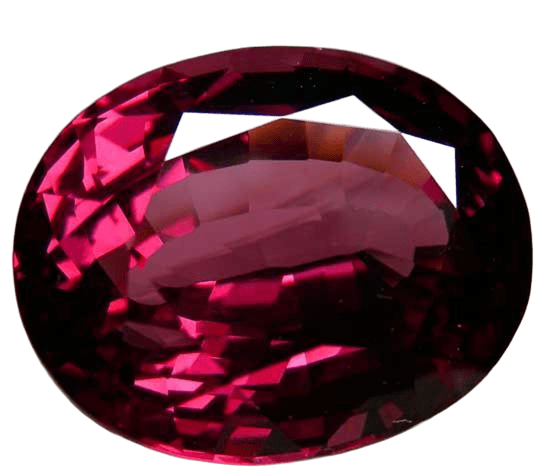
The Umba & Ceylon Legacy: Historical Sourcing
The history of Rhodolite is deeply tied to the legendary gem-producing regions of Sri Lanka (Ceylon) and East Africa. While the original North Carolina deposits (discovered in the late 19th century) provided the initial market recognition, it was the discovery of massive, saturated crystals in the Umba Valley of Tanzania that truly revolutionized the stone's status. These African stones, often referred to as "Umba Rhodolites," are known for their extraordinary transparency and the presence of slight "silk" inclusions that can sometimes create a soft, velvety glow similar to that of the finest Kashmir sapphires.
In Sri Lanka, Rhodolite is recovered from ancient alluvial gravels alongside sapphires and spinels. These "water-worn" crystals have been naturally tested by time, with the river systems acting as a natural quality control by breaking down weaker, more included material. As a result, Ceylonese Rhodolite is prized for its high clarity and excellent "light return." Today, while new deposits are occasionally found in Brazil and India, the African strikes remain the gold standard for saturation and size, with clean stones over five carats being highly sought after by boutique jewelry houses.
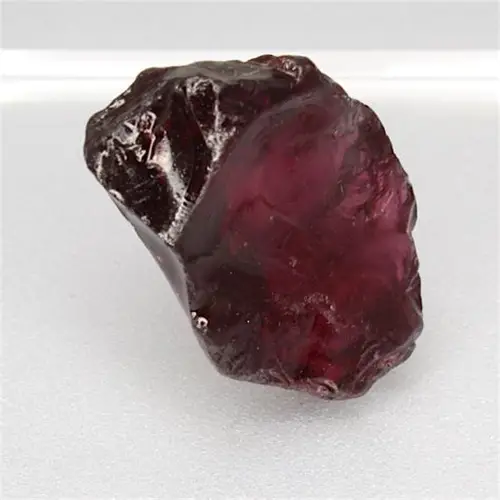
Investment Stability & Treatment-Free Rarity
From an investment standpoint, Rhodolite Garnet is considered a "blue-chip" secondary gemstone. Its value remains remarkably stable because it is almost never treated; unlike rubies or sapphires, Rhodolite receives no heat or chemical enhancement to improve its appearance. What you see is exactly what the Earth created over millions of years. This authenticity is a powerful selling point in the modern market, as collectors increasingly seek out gems with a transparent and natural pedigree. For the serious investor, the "all-natural" status of Rhodolite provides a level of confidence and long-term security.
The market for top-tier Rhodolite is currently driven by the demand for "grape" and "raspberry" hues, which command significant premiums over more common reddish varieties. As traditional precious stones become financially prohibitive for many, Rhodolite offers a compelling alternative—providing similar levels of brilliance and durability at a more accessible entry point. As more people explore the world of "connoisseur garnets," the rarity of large, eye-clean Rhodolites with saturated violet-red tones is expected to drive steady price appreciation, cementing its place as an essential asset in any diverse gemstone portfolio.