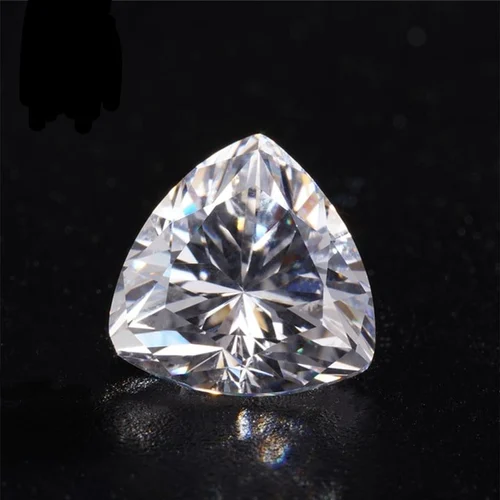
Rare Collection
Natural Loose Diamond Collection
The Diamond Family
The ultimate symbol of strength and brilliance, forged under the pressure of eternity.
The Unconquerable Carbon: A Billion-Year Odyssey
The Diamond is the only gemstone composed of a single element—pure Carbon. Its name comes from the Greek "adamas," meaning "indestructible" or "unconquerable," a fitting title for the hardest natural substance on Earth. Diamonds are formed approximately 100 miles below the Earth's surface, under pressures and temperatures so extreme that they force carbon atoms into the tightest, most stable arrangement possible in nature. These stones are then transported to the surface by rare, violent volcanic eruptions known as Kimberlite pipes. The diamonds we wear today are typically between 1 and 3 billion years old, making them the oldest objects most humans will ever touch.
While the classic colorless or "white" diamond is the industry standard, the Diamond family also includes the extraordinary world of "Fancy Colors." These are diamonds that have been "interrupted" during their formation by other elements or structural defects. Nitrogen creates the sunny yellows and oranges, while Boron produces the rare, celestial blues seen in the legendary Hope Diamond. Pink and red diamonds, the most valuable of all, are thought to be the result of "plastic deformation"—a molecular shift within the crystal lattice caused by intense tectonic stress. These rare colors represent the very pinnacle of luxury, with some specimens fetching millions of dollars per carat at international auctions.
Precision Cutting & Industrial Legacy
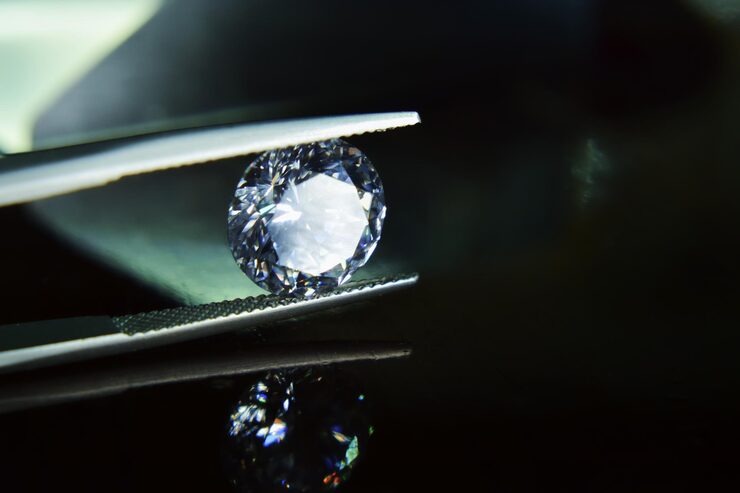
The value of a diamond has traditionally been governed by the "4 Cs": Color, Clarity, Cut, and Carat Weight. However, in the modern era, the "Cut" has emerged as the most important factor. A perfectly cut diamond is a mathematical masterpiece, designed to trap light and reflect it back to the eye with maximum "fire" (dispersion) and "scintillation" (sparkle). The modern "Round Brilliant" cut, with its 58 facets, is the result of centuries of optical research. Beyond the traditional round, fancy shapes like the Emerald, Pear, and Marquise offer unique ways to showcase the stone's internal world, catering to the individual style of the wearer.
Beyond its role as a decorative object, the Diamond family is a vital player in global industry and science. Due to its unmatched hardness and thermal conductivity, it is used in everything from high-speed cutting tools to the windows of interplanetary spacecraft. In the world of fine jewelry, the diamond remains the ultimate milestone marker—the stone of choice for engagements, anniversaries, and legacies. It is a material that transcends time, a billion-year-old traveler that has survived the most violent forces of the planet to emerge as a symbol of clarity, strength, and eternal devotion. To own a diamond is to hold a literal piece of the planet's mantle, refined into a point of pure light.