Rare Collection
Natural Malaia Garnet Loose Stones
Malaia Garnet
Stunning pink-orange to red-orange hues from the Umba Valley.
The Swahili "Outcast": A Rise to Rarity
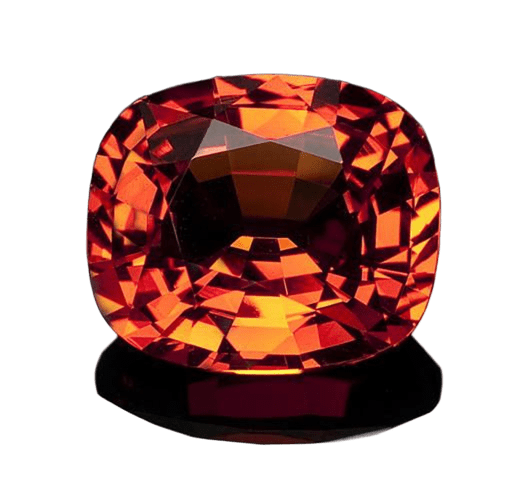
Malaia Garnet carries a name derived from the Swahili word meaning "outcast" or "prostitute." This historically derogatory name was given to the stone in the 1960s when it was first discovered in the Umba Valley. At the time, miners were searching for Rhodolite and Tsavorite; when they found these unusually colored pink-orange garnets that didn't fit the established categories, they discarded them as "nuisance" stones. It wasn't until the 1970s and 80s that the international gemological community recognized the stone's breathtaking beauty and unique chemical composition, eventually elevating the "outcast" to a position of high prestige in the luxury market.
Chemically, Malaia is a masterful organic blend, primarily consisting of a solid solution between Pyrope and Spessartite. This marriage of species results in a refractive index and level of brilliance that are typically superior to many other garnets. Its colors, which range from "champagne" and "peach" to intense reddish-orange, are entirely natural. Because the stone is almost never treated, it remains a favorite for those who value chemical purity. Today, the name Malaia is used with pride, representing a gemstone that defied convention and proved its worth through its own inherent optical brilliance.
Umba Valley: The Crossroads of Gemology
The Umba Valley, located on the border of Tanzania and Kenya, is arguably the most mineralogically diverse region in the world. This "geological melting pot" is the only place on Earth where such a wide variety of garnet species can be found in a single alluvial deposit. The formation of Malaia Garnet in this region occurred under intense metamorphic conditions, where a specific concentration of magnesium and manganese allowed the Pyrope and Spessartite lattices to merge seamlessly. This unique geography is why genuine Malaia Garnet is so geographically restricted; without the specific mineral "soup" of the Umba River basin, these stones simply would not exist.
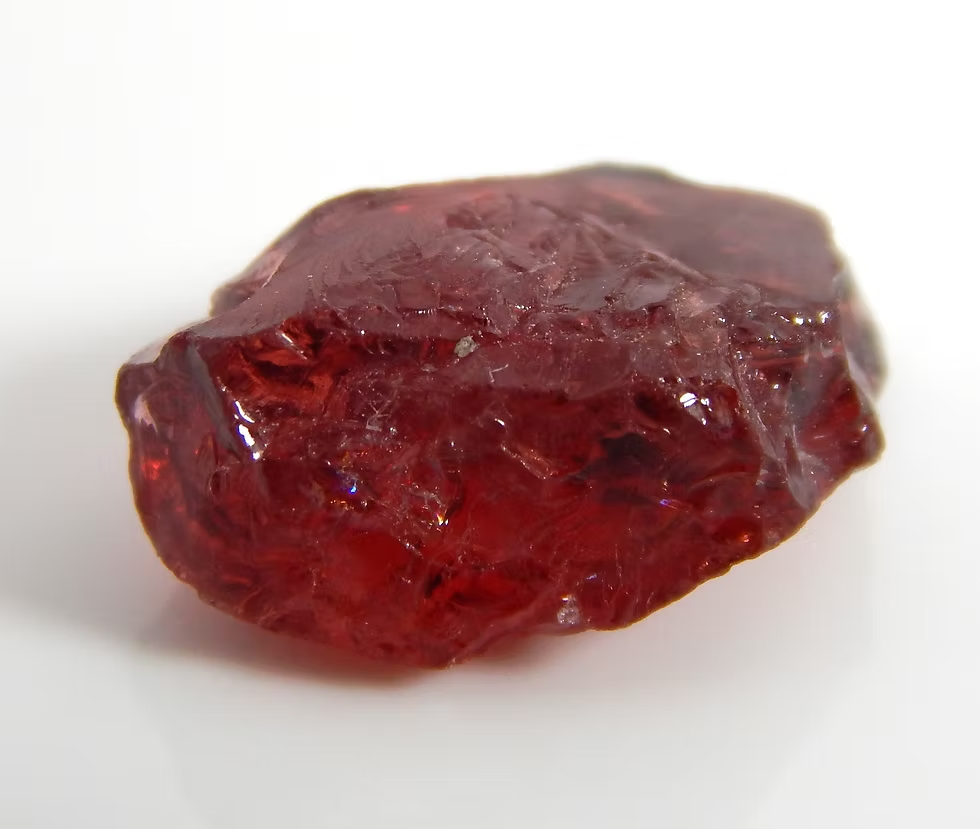
The alluvial nature of the Umba deposit means that Malaia Garnets are often found as water-worn pebbles, having been transported by ancient river systems from their original host rock. This "natural tumbling" process helps gemologists identify the most durable and clean crystals, as those with significant inclusions often break apart during their journey. As a result, many of the Malaia garnets reaching the market exhibit exceptional clarity, allowing them to be faceted into stones with incredible "fire" that rivals more expensive semi-precious and precious counterparts.
Investment Value & The Allure of the Orange-Pink
In the specialized market of "collector garnets," Malaia holds a unique and stable position. Its value is driven by its rarity and the specific desirability of its "sunset" hues. Unlike Spessartite, which is purely orange, or Rhodolite, which is purely rose-red, Malaia occupies the sophisticated middle ground. This "peachy" palette is highly sought after by designers who want to create pieces that complement a wide range of skin tones and metal settings. From an investment perspective, Malaia is considered a "boutique" gem—one that is favored by knowledgeable collectors who understand the nuances of the Garnet family.
The market for Malaia Garnet is also bolstered by its lack of artificial enhancement. In an era where many popular gems are regularly irradiated or dyed, the "all-natural" pedigree of Malaia is a strong selling point. As more people move away from the "big three" (Ruby, Sapphire, Emerald) toward unique and specialized stones, Malaia is perfectly positioned for long-term growth. For the investor, a large, well-cut Malaia Garnet with a strong pink-orange saturation is a robust and resilient asset, representing a perfect intersection of historical narrative and undeniable physical beauty.