Rare Collection
Beryl Family Gemstones
The Beryl Family
A lineage of crystalline perfection, encompassing Emerald, Aquamarine, and Morganite.
Architecture of the Gods: The Hexagonal Jewel
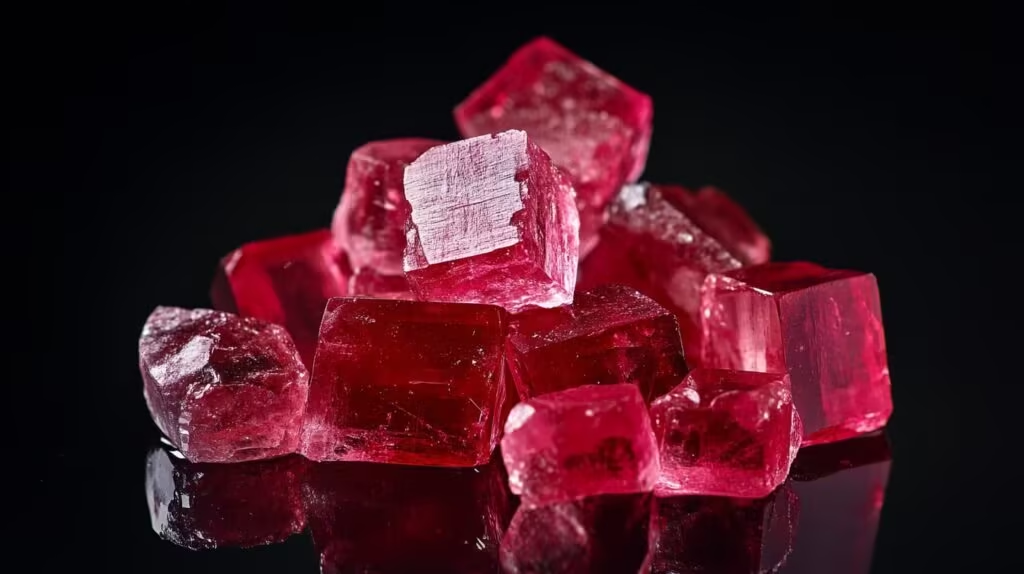
Beryl is a mineral species of extraordinary elegance and structural complexity, known scientifically as beryllium aluminum cyclosilicate (Be₃Al₂Si₆O₁₈). It crystallizes in the hexagonal system, often forming perfectly six-sided prisms that can grow to massive sizes. While many minerals are common, gem-quality Beryl is a rarity that requires the presence of the rare element Beryllium in specific geological environments—typically granite pegmatites or metamorphic schists. The resulting crystals are celebrated for their vitreous luster, high transparency, and a hardness of 7.5 to 8.0, making them ideal for both the most intricate jewelry and the most significant public collections.
The Beryl family is home to some of the world's most famous gemstones, each defined by the "impurities" that color them. The most prestigious is the Emerald, colored by chromium and vanadium. Because it forms in the tectonic "collision zones," Emerald is almost always found with a tiny internal world of inclusions—the "jardin" (garden)—which is considered a mark of its authenticity. In contrast, Aquamarine, colored by iron, often forms as near-flawless, "water-clean" crystals that represent the serene blues of the Mediterranean and the frozen clarity of the Arctic. Morganite, the soft pink to peach variety, owes its romantic hue to manganese, providing a sophisticated, modern alternative to the traditional precious stones.
Beyond the "Big Three" & Natural Heritage
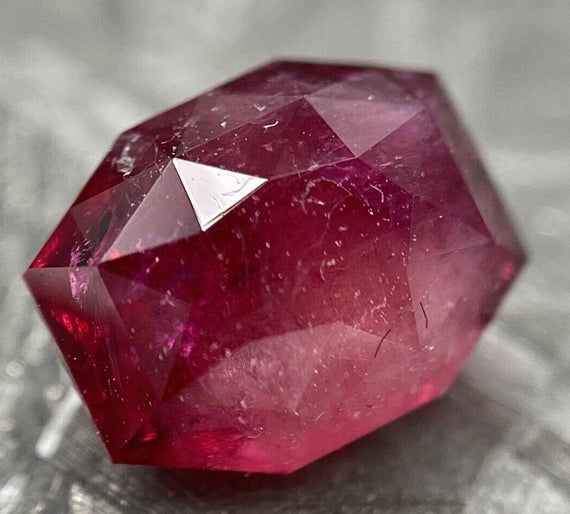
Beyond the "Big Three," the Beryl family offers other specialized treasures. Heliodor, named after the Greek word for the sun, provides a spectrum of golden and mint-green hues that seem to capture trapped sunlight. Goshenite, the colorless variety, was once used for the world's first eyeglasses before the invention of modern glass, a testament to its clarity. More recently, Red Beryl (Bixbite) has emerged as one of the rarest gemstones on Earth, found almost exclusively in the Wah Wah Mountains of Utah. These diverse expressions of a single mineral species allow Beryl to cater to every aesthetic, from the deep, "old-money" green of a Colombian emerald to the ethereal, liquid blue of a Santa Maria aquamarine.
In the world of high-value gemology, Beryl is prized for its ability to hold light and its consistent performance across generations. While Emerald requires careful handling and specialized cleaning due to its internal fractures, its durable cousins are workhorses of the luxury world. Top-grade Beryl is identified by its "open" color—saturation that remains vibrant even in larger sizes—and its crystalline "life." Whether it is a faceted stone of museum quality or a raw, architectural crystal specimen, Beryl remains one of the most intellectually and visually rewarding families in the world of mineralogy, a true pillar of the precious stone industry.